My unofficial motto for December is:
“That is a next year problem.”
Not as a productivity strategy.
Just as a reflection of reality.
December is full. Energy dips. Priorities shift. Some things naturally get deferred so we can get through the season without burning out.
And that’s okay.
What matters is what happens next.
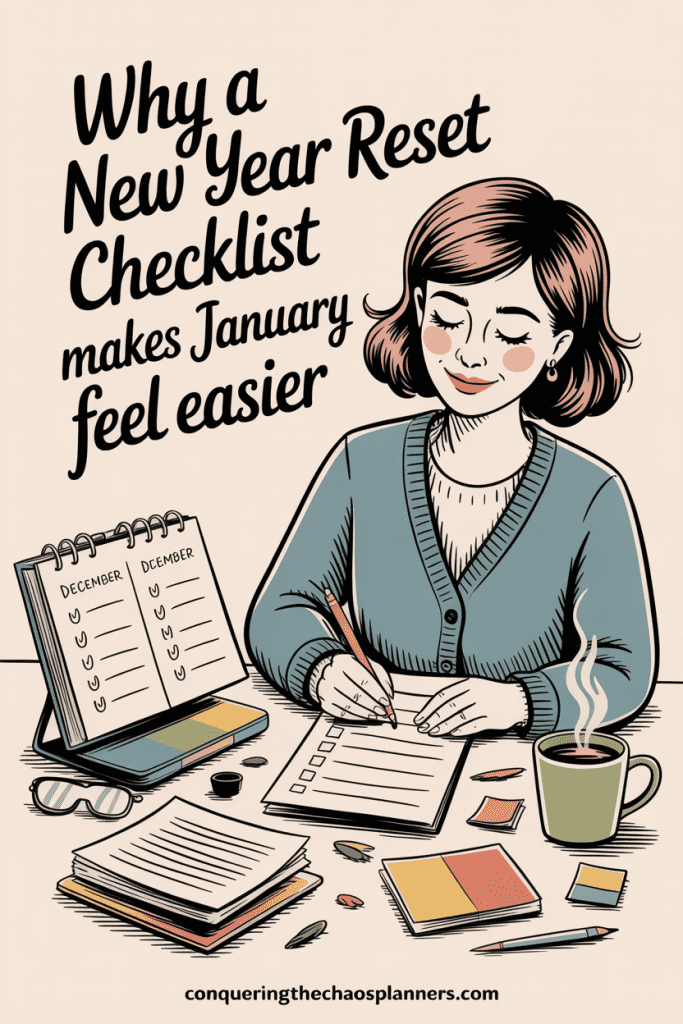
Because once December winds down, those “next year problems” don’t magically disappear. They’re still there—quietly waiting. That’s where a new year reset checklist comes in.
The Quiet Tiredness No One Sees
This isn’t the kind of tired that comes from chaos or crisis.
You’re still functioning.
Still showing up.
Still handling what needs to be done.
But you’re also carrying unfinished business in your head.
Not big dramatic problems.
Not urgent fires.
Just things like:
- tasks you postponed because December was packed
- small decisions you intentionally set aside
- items you didn’t have the bandwidth to deal with yet
- reminders your brain keeps replaying so you don’t forget
Each one feels manageable.
All of them together create constant background noise.
That’s the quiet tiredness. The kind no one sees, but you feel it anyway.
Why January Feels Heavy Before It Even Starts
January gets blamed for being hard.
But January usually isn’t the problem.
What makes January feel heavy is what it inherits.
Unfinished tasks roll forward.
Deferred decisions come with you.
Mental notes stay open.
So before you add a single new goal or plan, your brain is already juggling old ones. That’s why January can feel overwhelming before you’ve even really started.
The Trap: Adding More on Top
This is the moment many people try to fix that feeling by adding more:
- ambitious goals
- fresh routines
- long to-do lists
- big plans for the year ahead
All while the old stuff is still hanging out in their brain.
Do yourself a favor and don’t do that.
Adding lofty goals on top of unfinished business doesn’t create motivation. It keeps the cycle going. The cycle of starting things without finishing others. The cycle of mental clutter. The cycle of feeling behind before you’ve begun.
If you want January to feel easier, the answer isn’t more.
It’s completion.
Why a New Year Reset Checklist Helps
A new year reset checklist isn’t about avoiding responsibility or pretending things didn’t get put off.
It’s about acknowledging that some things did get deferred—and now it’s time to start checking them off.
When you use a reset checklist intentionally:
- mental tabs close
- background reminders stop popping up
- your brain has less to track
Relief comes from finishing, not from starting over.
That’s why this works.
👉 Ready to Start Checking Things Off?
Download the New Year Reset Checklist and handle a few lingering tasks so they stop taking up space in your head.
This isn’t about doing everything.
It’s about doing enough to feel lighter.
What a “Reset” Actually Looks Like
This part matters, because it’s easy to overthink it.
A new year reset checklist is not:
- a total life overhaul
- a deep clean of everything
- a big reinvention
It’s small and practical.
A reset might look like:
- canceling or adjusting one subscription
- setting up auto-pay for a bill you keep forgetting
- returning or dealing with something you’ve been avoiding
- updating a list or document you rely on
- finishing one small task that’s been quietly nagging you
You don’t do everything.
You don’t try to be perfect.
You just start checking things off.
Why This New Year Reset Checklist Exists
I created this new year reset checklist for the moment when you’re done saying “that’s a next year problem” and ready to handle a few things so they stop taking up space in your head.
It’s not a brain dump.
It’s not a planning system.
It’s not another list asking more from you.
It’s a curated list of the kinds of tasks that tend to linger in the background and drain energy when they go unfinished.
You scan it.
You notice what feels relieving.
You pick a few items to handle.
That’s the reset.
Lighter Is Enough
You don’t need January to be impressive.
You don’t need a full reinvention.
You don’t need big goals stacked on top of old obligations.
You just need fewer unfinished things following you into the new year.
That’s what a new year reset checklist is for.
If this post resonated, I’d love to hear from you—what’s one thing you’re ready to stop calling a “next year problem” and finally check off your list?
Most Recent Posts:
Get Caught Up Here
- Feeling Overwhelmed When Nothing Is Wrong? Why Life Feels Like Too Much
- How Background To-Dos Create Mental Clutter
- No Goals for New Year? Why Starting Without Goals Can Actually Help
- Why the Days Between Christmas and New Year Feel So Weird (and What Actually Helps)
- Closing the 100 Days ’Til Christmas Series
- One Last Minute Christmas Planning Sesh Before You Let It Go
- 10 Days ’Til Christmas — Christmas Menu Planning That Actually Makes Life Easier
- 14 Days ’Til Christmas – Teacher Gift Ideas for Christmas
