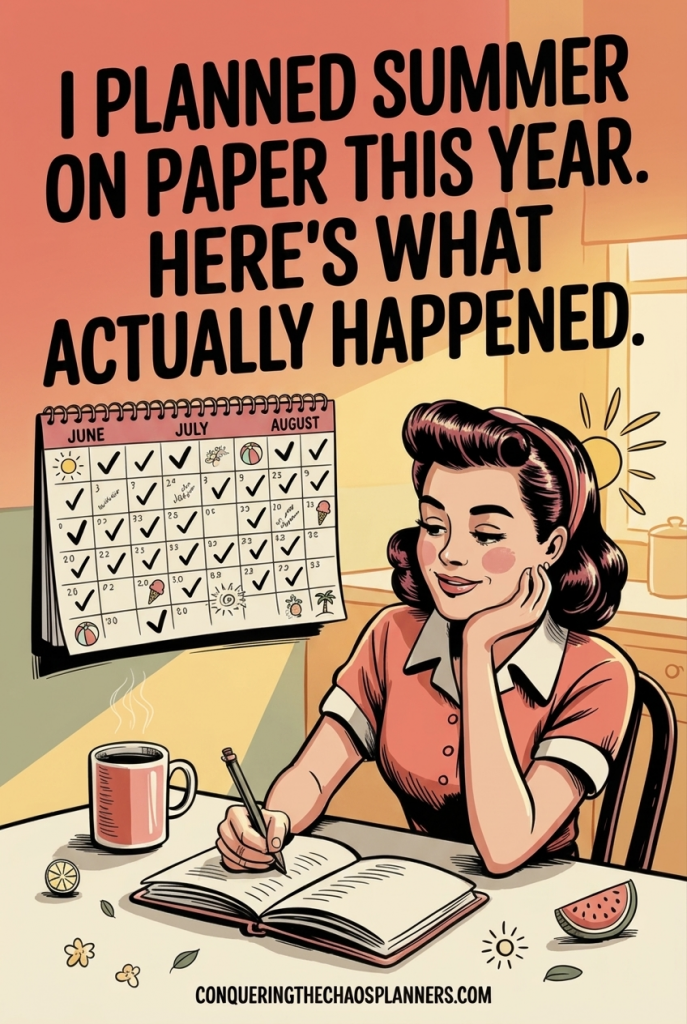
Every summer I make some version of a plan.
Sometimes it’s a list on my phone. Sometimes it’s a mental note. Sometimes it’s just a vague intention — this summer is going to be different. We’re going to do more of the things that feel like summer and less of the things that just fill time.
And then it’s August. And I do the quiet accounting. And the list is mostly undone.
This year I actually figured out why that kept happening — and I tried something different. I planned summer on paper — actually on paper, actually in advance, with a calendar and a bucket list and a short weekly check-in — and I wanted to write down what it was like to know how to plan your summer that way. Not to sell you on a system. Just to tell you what actually happened.
What I Actually Did
Before summer started — sometime in late May, when the school year was winding down and June felt like it still had some air in it — I sat down for about an hour.
I got out a calendar and looked at the three months. June, July, August. What was already on it — the confirmed things, the trips, the obligations. What I wanted to happen. And what I was, quietly, deciding not to try to do this summer. That last part was new for me.
Then I made a bucket list. Not a wish list — an actual working list I kept somewhere visible and kept adding to as the summer went on. The things I wanted to do at least once. The things that felt like summer to me. The things I’d been rescheduling for two years.
And then every Sunday, I sat down for about twenty minutes and looked at the coming week. What was already in it. What was open. Whether I could aim one of those open slots at something on the list.
That was it. That was the whole thing.
It was not complicated. I want to be clear about that.
What Summer Looked Like
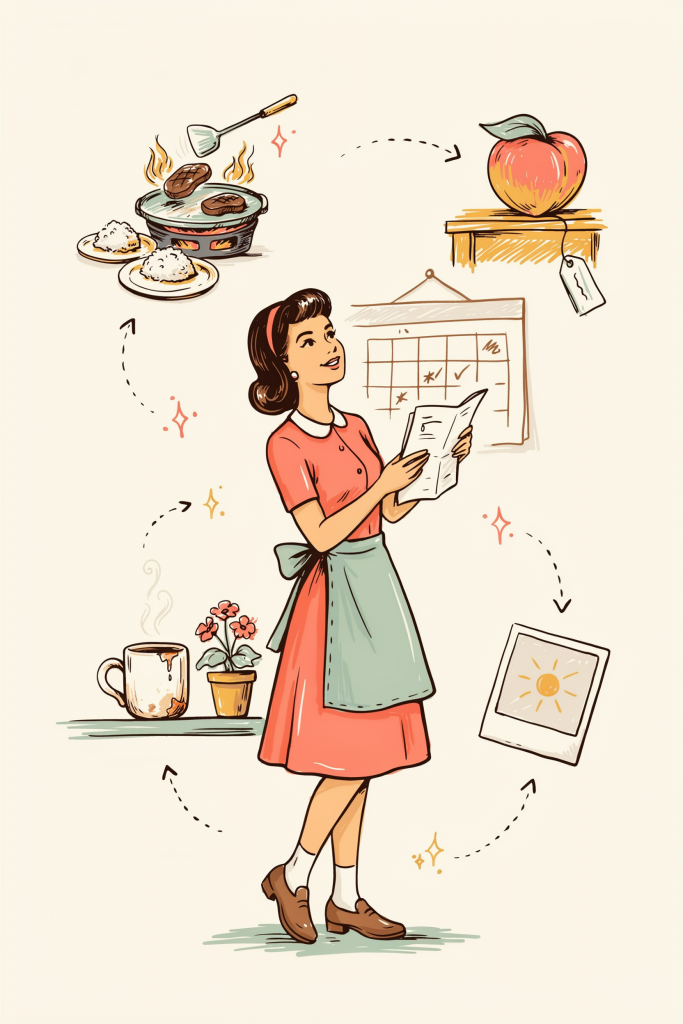
On a Tuesday night in late June, we went to hibachi for dinner. We’d had it on the list since May — it’s one of those things we say we want to do and then somehow keep not doing. That week had an open Tuesday. So we went. It was loud and chaotic and the kids got too much fried rice and it was exactly what we’d said we wanted.
In early July, there was a Saturday that had two open hours in the afternoon. Normally those hours would have dissolved — errands, screens, that vague restless feeling of a weekend afternoon going nowhere. Instead, I’d flagged the farmers market on the list back in June. We went. We bought peaches. The peach orchard trip happened three weeks later, in late July, because I’d kept the list visible and there was a weekend that had the right shape for it.
The friend brunch happened. The one I’d been rescheduling since January. It got a date in August because it was on the list with her name next to it, and when I looked at the calendar that Sunday morning, I texted her. We met at ten. We were there until noon. Neither of us could remember the last time we’d done that.
There was a slow morning in mid-July — a Saturday where I got up before anyone else, made coffee, and sat on the back porch for forty-five minutes without my phone. It was on the list. “Slow morning, just one.” I counted it.
At the end of each month I looked back through my phone photos for about five minutes — just a small ritual of scrolling and going, okay, we did that. The photos were there. I could find them.
None of this was dramatic. It wasn’t a summer from a movie. The laundry still piled up. There were weeks where nothing from the list happened at all. But the ordinary slots — the Tuesday nights, the Saturday afternoons, the open Sunday mornings — some of them went somewhere on purpose. That was different from before.
What I Noticed in August
August arrived the same way it always does — fast, and a little startling. And I did the quiet accounting, same as every year.
The list was not empty. I hadn’t done everything on it. There were things I’d written in May that never happened — the outdoor concert, the long bike ride, the day trip we kept pushing. Those are fine. They’re on next year’s list already.
But most of the things that had actually mattered to me — the ones I’d written down because I genuinely wanted them, not because they sounded like something you’re supposed to do in summer — most of those had happened. Not all. But most.
The summer didn’t feel like it had slipped by. It felt like I’d been inside it. I remember specific weeks. I remember where we were on a Wednesday in July. I have photos I can find.
The summer happened with me, not to me.
That’s not a transformation. I’m not telling you my whole life changed. It was just an ordinary summer — loud, imperfect, too short. But it was a summer I’d been present for. The ordinary kind of life, lived on purpose. That turned out to be enough.
If You Want to Try It
If any of this sounds like the summer you keep meaning to have — I put the system I used into a short workbook-based course called the Summer Home Blueprint.
It walks you through mapping the season before it starts, building the bucket list that actually lives on the calendar, the weekly check-in, and a handful of other pieces I haven’t mentioned here — a photo system, a household reference setup, a gentle look ahead to fall.
It’s short. It’s practical. It’s the kind of thing you can work through in a few sittings and actually finish.
If you’re reading this in June or July, you still have time to use it for this summer.
Get the Summer Home Blueprint here.
