

Every year it happens the same way.
Winter feels manageable. Life might even feel a little slow.
Then spring arrives… and suddenly everything speeds up.
One minute you’re enjoying quiet evenings and predictable routines. The next minute your calendar looks like someone spilled a box of activities all over it.
Sports practices start back up.
School events begin appearing every week.
Field trips pop up.
Travel plans need to be finalized.
Yard work returns.
Outdoor invitations start rolling in.
And somehow the weeks begin feeling packed before you even realize what happened.
If spring has ever made your life feel unexpectedly chaotic, you’re not alone. And more importantly, it doesn’t mean you’re disorganized.
Spring feels overwhelming for a much simpler reason.
Your routines changed — but your planning probably didn’t.
Why Does Spring Suddenly Feel So Busy?
Spring often feels chaotic because routines change quickly while schedules fill up with new activities like sports, school events, travel, and outdoor plans. When these seasonal changes happen all at once, everyday routines stop working and life can suddenly feel overwhelming.
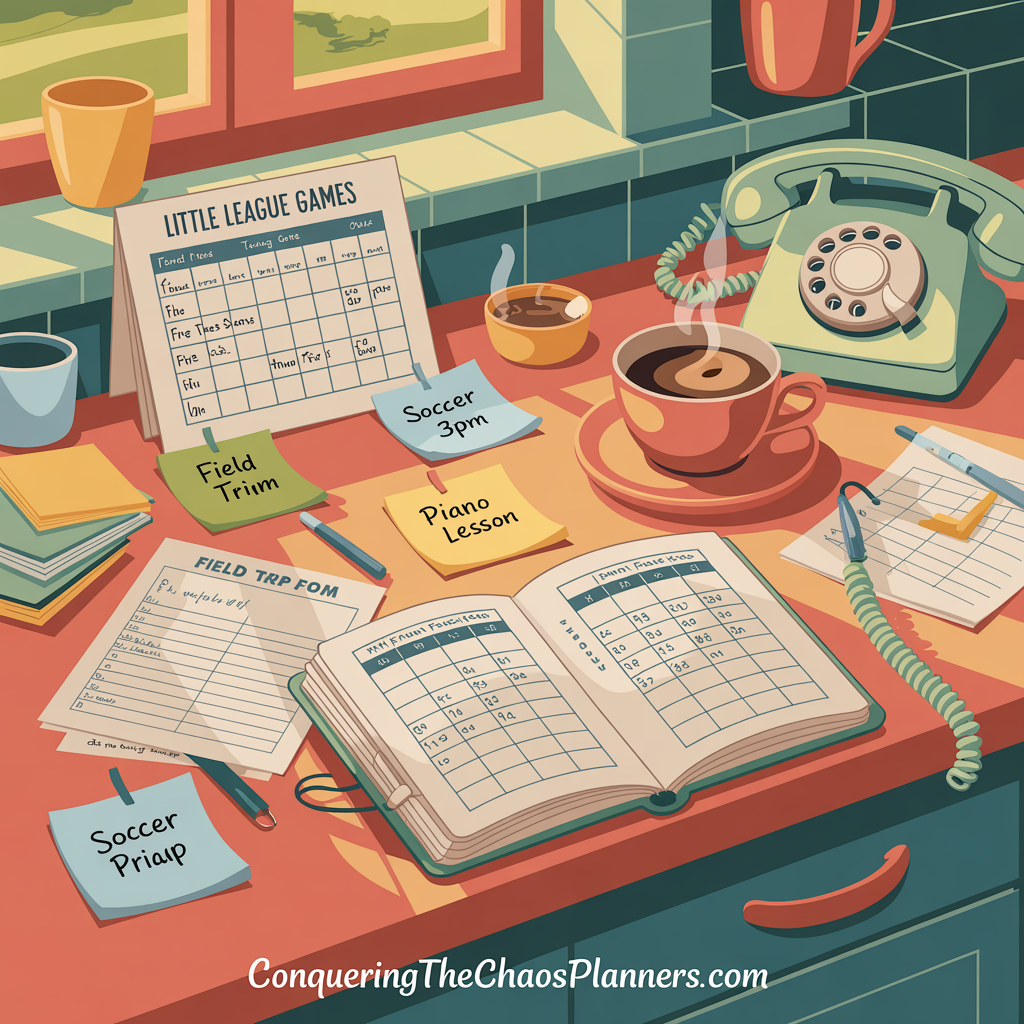
Winter routines tend to be fairly predictable.
Shorter days keep people home more often. Activities slow down. Many schedules become a little quieter after the holidays.
But spring quietly changes the rhythm of life.
Suddenly you may be juggling things like:
- sports schedules
- school performances
- field trips
- travel planning
- end-of-year school events
- outdoor activities
- seasonal home projects
- social gatherings
None of these things feel overwhelming on their own.
The problem is they all start appearing at the same time.
And if you haven’t stepped back to look at the entire season, it can feel like new responsibilities keep popping up every week.
That constant stream of small decisions creates mental load.
You find yourself thinking things like:
Wait… when is that recital again?
Did I sign up for that camp yet?
What are we doing for Memorial Day?
Do we have anything for dinner tonight?
None of these questions are huge.
But when they stack on top of each other, life starts feeling chaotic again.
The Hidden Problem: Seasonal Transitions
One thing I’ve noticed over the years is that every season requires a small reset.
Your winter systems stop fitting your life.
Spring introduces new variables.
Your schedule changes.
Your routines change.
Your responsibilities change.
But most people continue running their life using the same mental system they used during winter.
Which usually means holding everything in their head.
That works for a while.
Until suddenly it doesn’t.
Why Spring Planning Makes Busy Seasons Easier
This is where spring planning can change everything.
Instead of reacting to things as they appear, you take a little time to step back and look at the entire season.
This might mean:
- laying out the next few months on a calendar
- identifying important events and deadlines
- capturing tasks that are floating around in your head
- noticing busy weeks before they arrive
When you can see the season in front of you, things stop feeling so unpredictable.
One of the most helpful things you can do is map the entire spring season out in one place so everything is visible at once. For example, you might lay out March through June on a calendar and transfer every fixed-date event so you can see the whole season at a glance.
This includes things like:
- school events
- travel
- sports schedules
- holidays
- ceremonies
- appointments
Once those immovable events are visible, the rest of the season becomes much easier to manage.
Instead of surprises, you start seeing patterns.
You notice the busy weeks ahead of time.
And you can plan around them instead of scrambling through them.
The Power of Getting Everything Out of Your Head
Another thing that makes spring feel overwhelming is all the half-formed thoughts floating around in your head.
Things like:
- camp registrations you need to research
- summer plans you haven’t confirmed yet
- household projects you’d like to tackle
- school forms you haven’t filled out
- seasonal purchases you need to make
When these things stay in your head, they create background stress.
That’s why I always recommend keeping a seasonal brain dump list.
Anything that pops into your mind goes onto the list.
Nothing stays in your head.
Once it’s written down, it becomes something you can deal with gradually instead of all at once.
Why Dinner Decisions Get Harder in Spring
One place people really feel the pressure of busy spring schedules is dinner.
When evenings become packed with activities, the mental effort of deciding what to cook can feel like one more exhausting decision.
This is why simplifying meals during busy seasons can be incredibly helpful.
One system I often recommend is a simple 6-week dinner rotation.
Each week includes about five planned dinners, leaving space for leftovers, pantry meals, or eating out when schedules get hectic. The rotation can repeat to cover the entire spring season, which dramatically reduces weeknight decision-making.
When your schedule is busy, removing even a few daily decisions makes a noticeable difference.
The Weekly Reset That Keeps Everything Moving
Once the season is mapped out, you don’t need to plan everything at once.
Instead, you simply check in once a week.
During a weekly planning session you might:
- review upcoming events
- move a few items from your brain dump into the week
- assign meals for the week
- prepare for upcoming activities
This weekly rhythm helps move seasonal tasks forward gradually instead of all at once.
Life still gets busy.
But it stops feeling chaotic.
How to Plan Your Spring Season in 5 Simple Steps

If spring tends to sneak up on you every year, a little planning at the start of the season can make a big difference.
You don’t need an elaborate system.
Just a simple way to see the season ahead and make a few decisions early.
Here is a straightforward way to plan your spring season.
1. Map the Next Few Months
Start by laying out the months ahead so you can see the entire season at once.
Look at March through June and transfer any fixed-date events onto a calendar. This might include things like holidays, school events, sports schedules, travel, or appointments.
Seeing the entire season at once helps you identify busy weeks before they arrive.
2. Capture Everything in a Brain Dump
Once your calendar is visible, additional tasks and decisions will start surfacing.
Write them down.
This might include:
- forms you need to complete
- purchases you need to plan
- seasonal home projects
- travel preparation
- activities you want to schedule
Capturing these items in one place prevents them from floating around in your head and creating mental clutter.
3. Decide What You Are Not Doing
Spring is full of opportunities, invitations, and ideas.
But trying to do everything is one of the fastest ways to create stress.
Take a moment to decide what you are not doing this season.
This might include:
- events you are skipping
- home projects you are postponing
- trips you are delaying
When you clearly declare something is not happening, it stops taking up space in your mind.
4. Simplify Everyday Decisions
Busy seasons are easier when small daily decisions are simplified.
This is especially true with meals.
Having a simple dinner plan for the season — even something as basic as a rotating list of meals — can remove a surprising amount of stress from weeknights.
5. Plan One Week at a Time
Once the season is mapped out, you don’t need to solve everything at once.
Instead, review your calendar each week.
Look ahead to upcoming events, move a few tasks from your brain dump into the week, and assign meals based on your schedule.
This kind of weekly planning keeps the season moving forward without becoming overwhelming.
The System I Use for Spring Planning

After experiencing the same spring chaos year after year, I realized the problem wasn’t a lack of organization.
It was a lack of seasonal planning.
So I created a system I now use every year to prepare for the spring season before it gets busy.
It’s called the Spring Home Blueprint.
Inside the system, we walk through things like:
- mapping the entire spring season
- creating a brain dump so nothing stays in your head
- planning meals for busy weeks
- preparing your home for seasonal transitions
- building a simple weekly planning rhythm
The goal isn’t to create a perfect plan.
It’s simply to make the season feel lighter and easier to manage.
Spring Doesn’t Have to Feel Overwhelming
Spring will probably always be a busy season.
But busy doesn’t have to mean chaotic.
A little spring planning goes a long way toward making the entire season feel more manageable.
When you can see what’s coming, capture what’s on your mind, and move things forward week by week, the stress starts to fade.
Life still happens.
But it feels a lot less overwhelming.
If you’d like help organizing the season ahead, you can learn more about the Spring Home Blueprint here.
It’s the exact system I use to keep spring from quietly turning into chaos.
